Wind Tunnel
Bioaerosolization sampling wind tunnel
Introduction
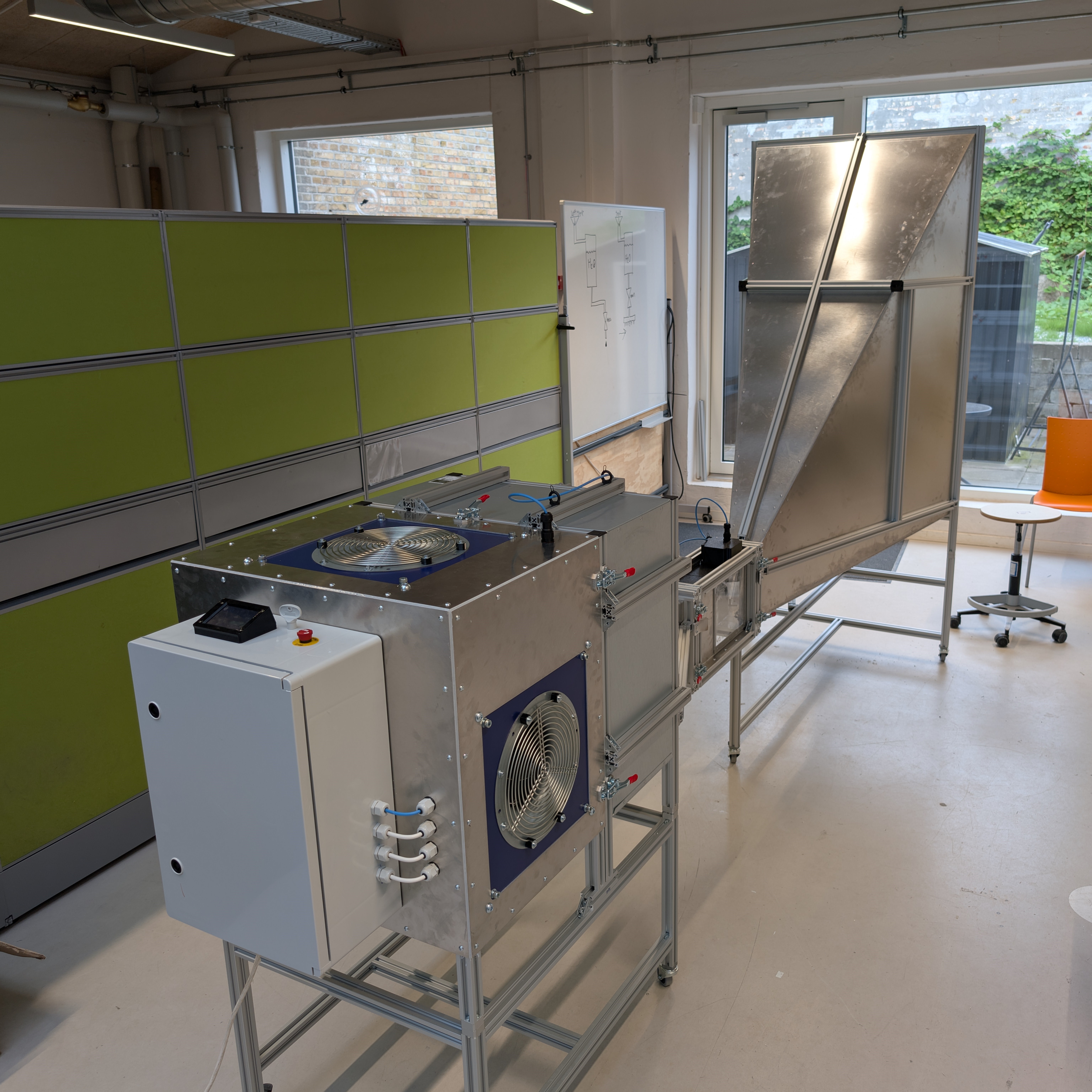
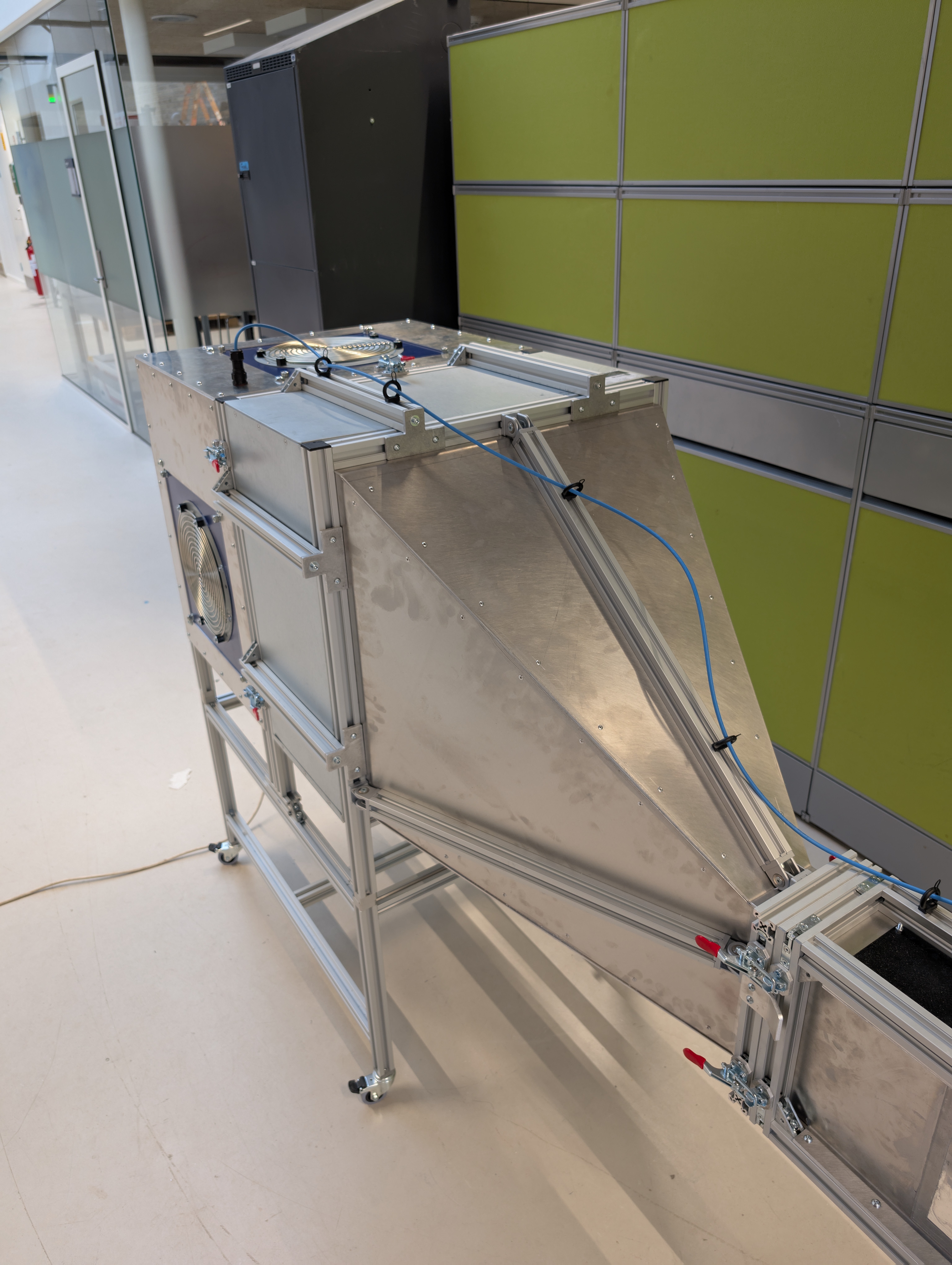
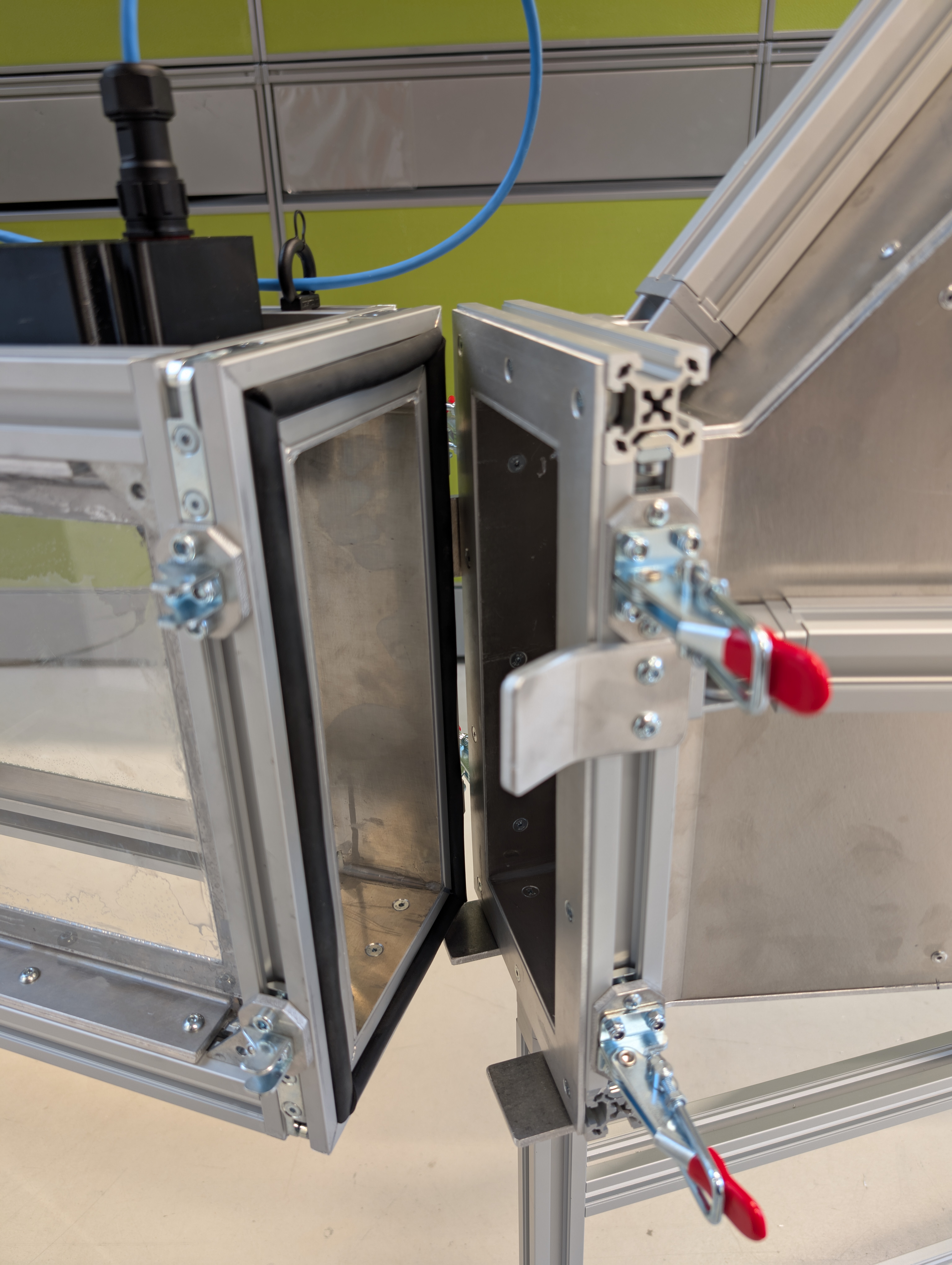
This project was developed as part of my work at Aarhus University. It involves the design of a wind tunnel for studying bioaerosolization. The procedure consists of loading a soil sample into the tunnel’s test section, where it is subjected to varying wind conditions and simulated rainfall. The resulting aerosols are then captured using output filters. While the tunnel is primarily intended for laboratory experiments, it is also designed to be portable for field deployment. The system is composed of three main sections:
Motor Section
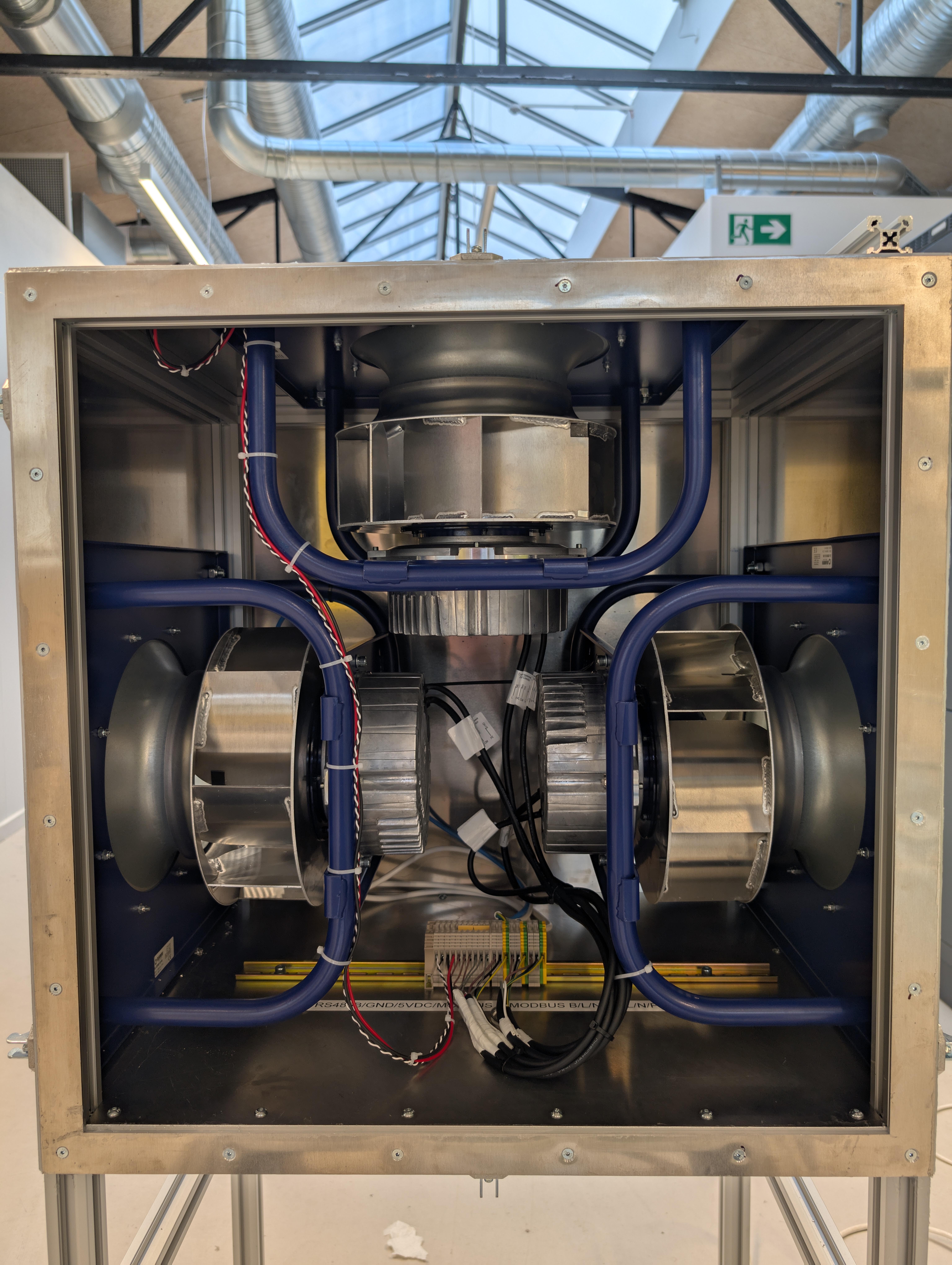
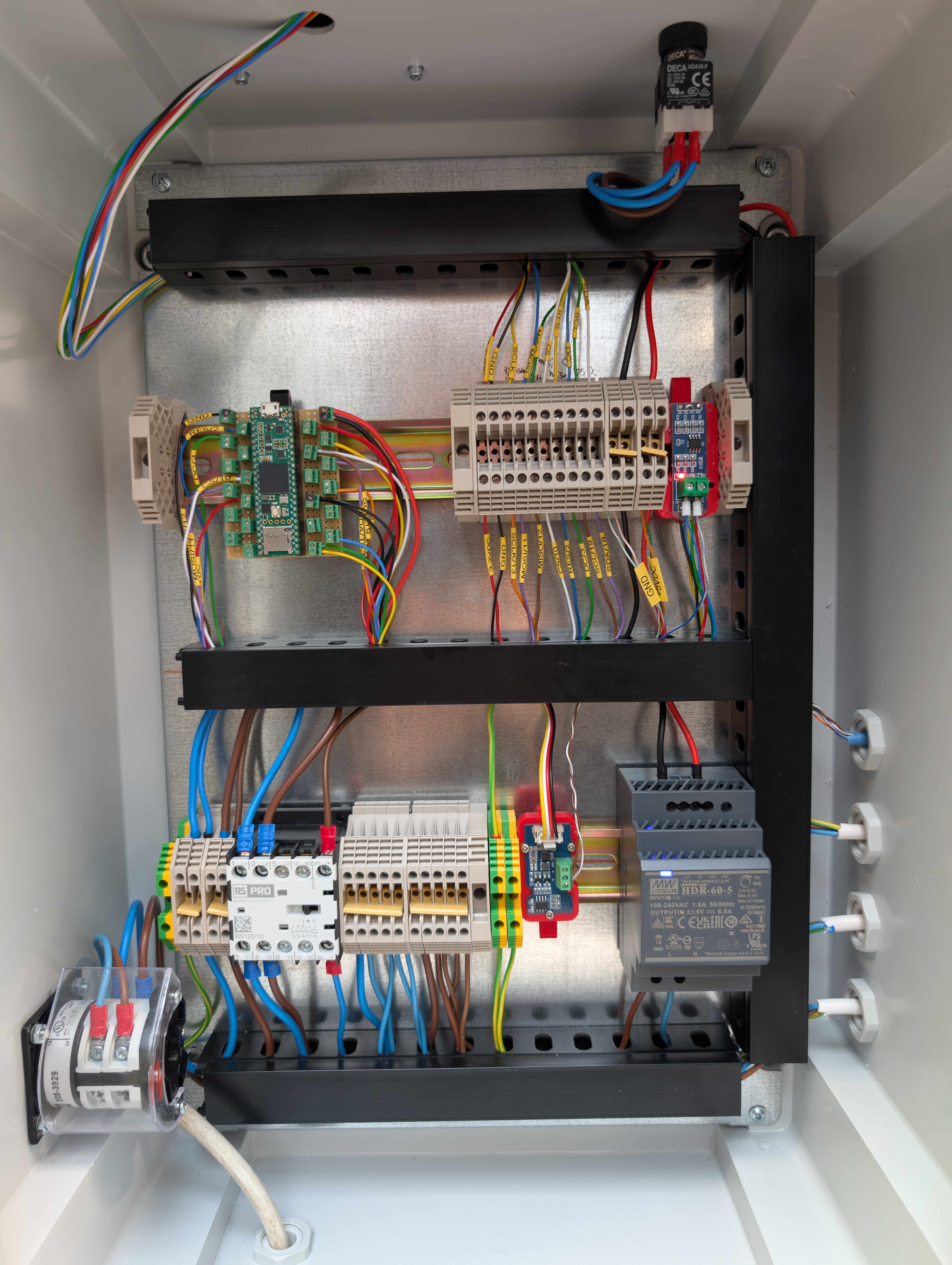
This section houses the three blower motors that generate the wind, the electrical control cabinet, and a high-flow HEPA prefilter.
Test Section
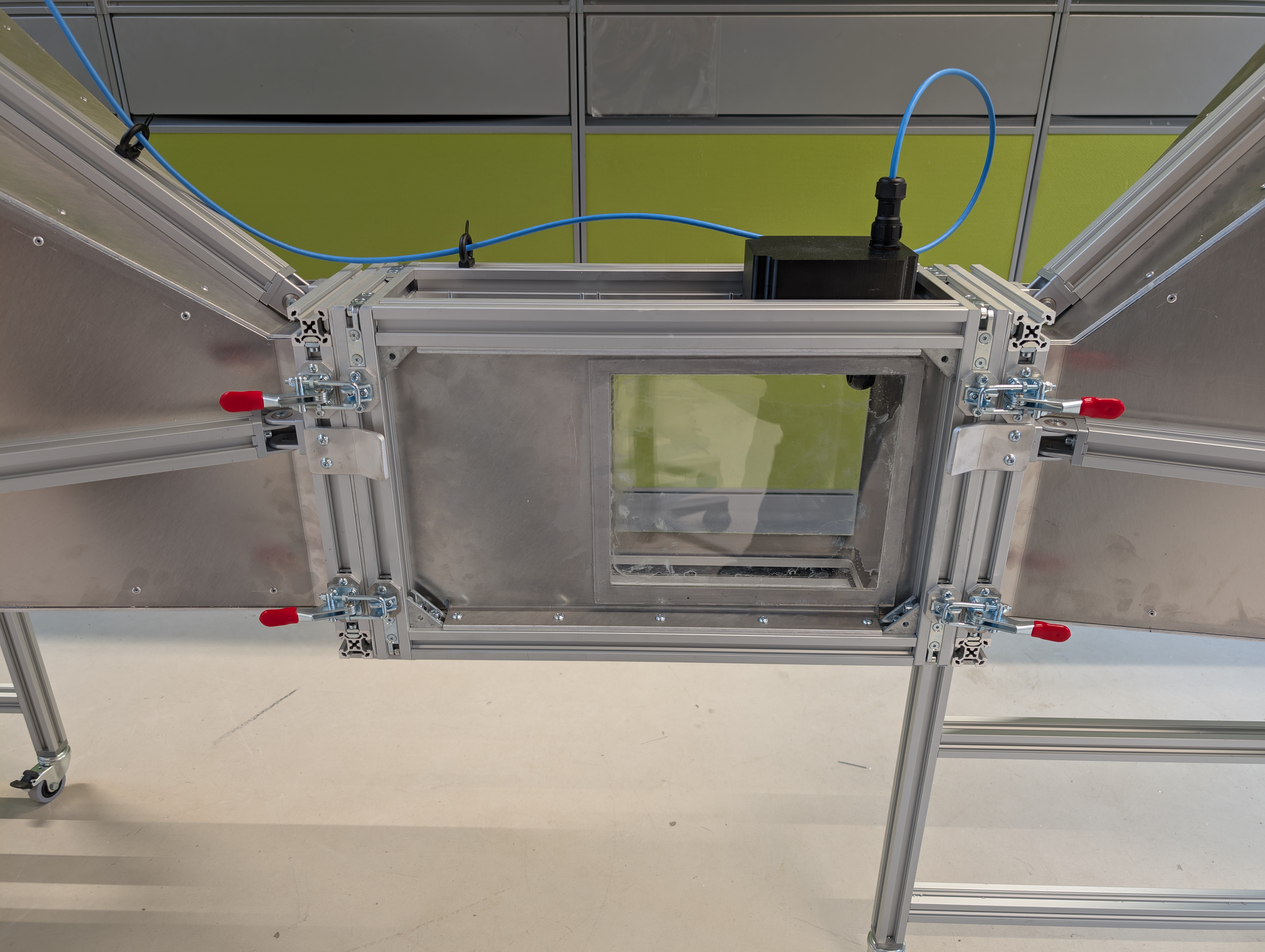
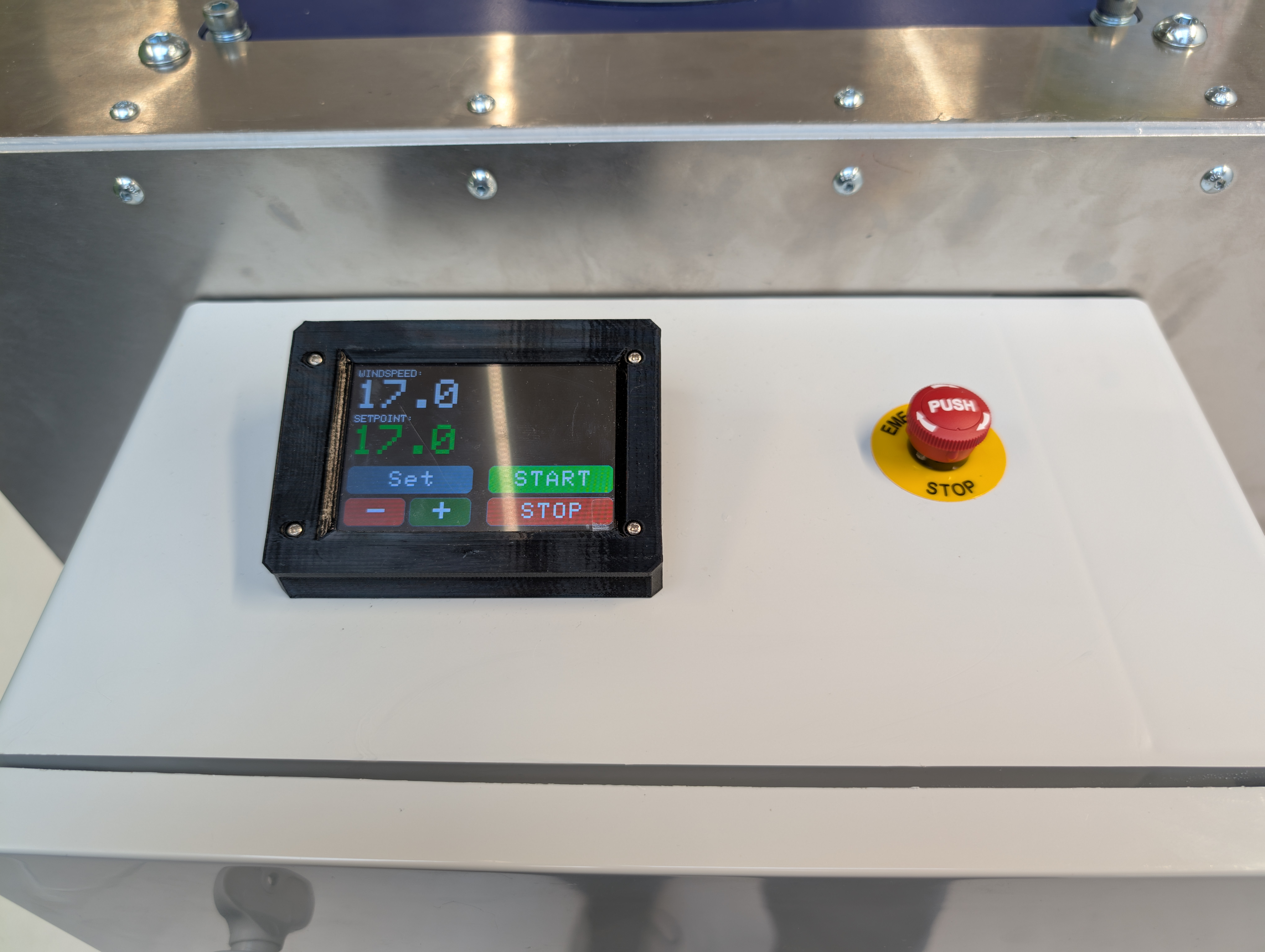
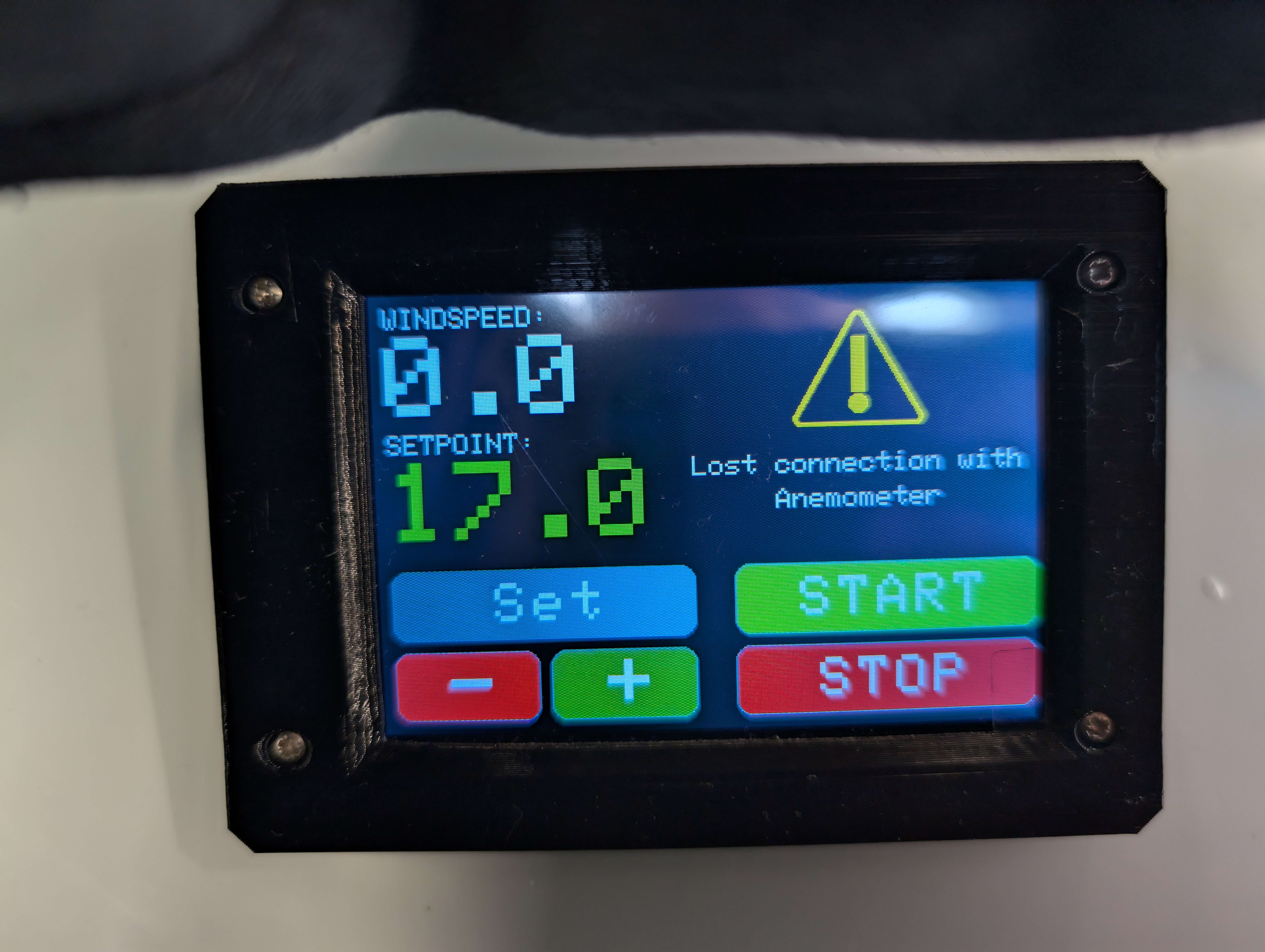
Here, the system can produce wind speeds of up to 30 m/s to expose soil samples loaded from below. An integrated anemometer provides real-time feedback to the motor controller, ensuring the correct wind speed is maintained throughout the experiment.
Sample Section
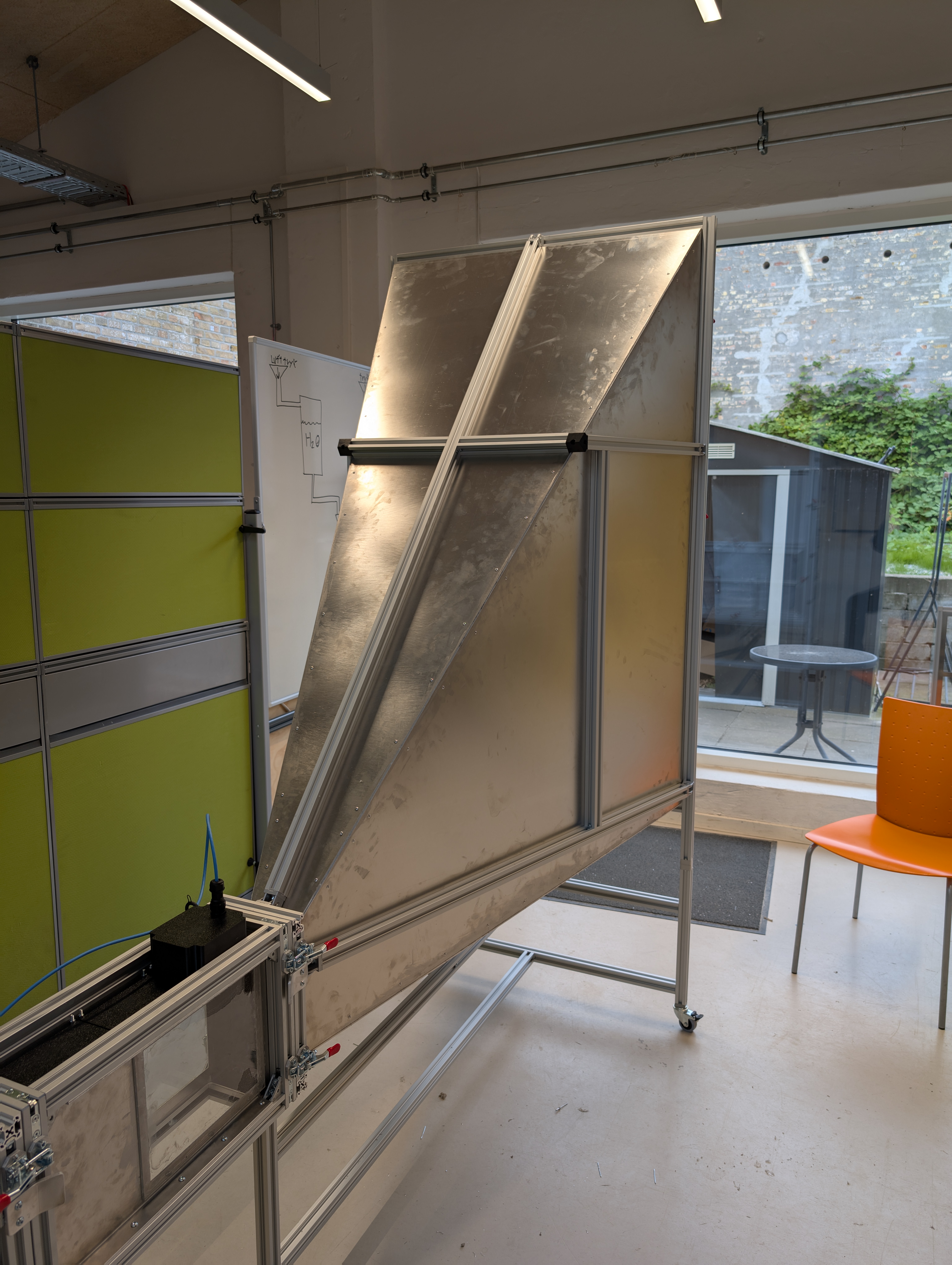
This section expands the airflow over a large array of sample filters, allowing all the air to be collected efficiently while minimizing pressure drop.